“Why A.I. Isn’t Going to Make Art” (Blog Post 1)

Ted Chiang contends in his essay that generative AI isn’t effective as an artistic tool because it substitutes automated averages for the thousands of decisions that make up art.

If we value the process of creation and the human connection behind a work, Chiang’s arguments will likely resonate with us.

1. Chiang claims that a 10,000-word story requires 10,000 decision, whereas a prompt requires only a few. If art is the sum of these micro-decisions, then AI-generated content is blank because the software fills in the gaps with the most bland and least interesting options available on the internet. He argues that language is a system for communicating subjective feelings. As a result, AI has no feelings or desires, it isn’t actually using language; it is likely transfering the form of the words to image, much like a butterfly’s wing mimics an eye to trick a predator.

2. He breaks down the role of college essays into two main functions, those ar developing critical thinking and building professional competence. In Chiang’s view, automating the essay-writing process defeats its entire purpose, as the value lies in the effort of the process rather than the existence of the final text.

3. To explain the relationship between skill and intelligence, Ted Chiang gives an example on a distinction proposed by computer scientist Francois Chollet. Skill is defined as how well a person in a specific task. Intelligence is refer to the process to gains new skills. Chiang argues that these two concepts are often confused, but are fundamentally different.

4. According to Chiang, generative A.I. is a fundamentally dehumanizing technology because of how it changing the relationship between human intention and the act of creation. He bases this conclusion on several key argument like the reduction of intention, fewer expression, less personal effort, plagiarism without guilt

Blog Post #1

Tab1

My thoughts after reading “Why A.I. Isn’t Going to Make Art” by Ted Chiang, I agree with Ted on this topic because anyone can be an A.I. artist. Being an A.I. artist doesn’t require any skill at all. The only thing that A.I. artist has to know is how to write prompt, while painter or photographer take months, years to master these skills. As Ted said in the article that you can clearly see the difference between an amateur photographer and a professional photographer. A.I. art limits our creative thought because it’s only focus on prompt, while real artists have to decide numerous of choices to express their artwork. Personally, I still think A.I. is a useful tool and crucial for human progress, if we know how to utilize it. For example, it can help completing repetitive work, reduce researching time. Despite all of that, A.I. will never replace humans in terms of making art. Art without effort and attention to detail will never be true art.

My question : Will artists be replaced by A.I. in the future?

Tab2

  1. Chiang said that effort equals choice. A.I. companies don’t want to create an A.I. model that require plenty of effort. Which means, people who write a novel with A.I. will need to put effort into creating as much as people who don’t use A.I. to write it.

2. According to the article, the purpose of college essays is to strengthen students’ critical thinking skills. This will develop students’ skills necessary for whatever job a college student will get.

3. Chiang said that skill is how well you perform at a task, while intelligence is how effective you gain new skills.

4. It’s a fundamentally dehumanizing technology because it treats us less than what we are. We can do so much better than A.I. to communicate with others through art, writing, etc.

Blog-1

I agree with Ted Chiang in this article. On his theory that art is the result of numerous individual decisions and human intention makes sense. A.I. lacks the emotions, experiences and effort that real art typically reflects and even if .A.I. doesn’t entirely replace human creativity, I believe it can still be a helpful tool that helps people start projects or generate ideas.

His point of view does align with how I use technology and modern AI tools. AI can be used to quickly generate text or ideas, but human editing, modification and addition typically yields the best results. In the absence of human input, the content frequently seems less significant or generic.

Question:

Will A.I tools become more advanced in the future, could they eventually allow human to make more creative choices and produce real art?

Blog 1- Thoughts on AI v.s. Human art

There is a popular saying: “Modern problems require modern solutions.” Creating modern art often comes as a challenge to new artists and writers, and so, as a solution, they try to get inspiration by writing prompts in AI to create a new piece of art. This practice of integrating AI in art is a topic of constructive criticism among art critics. Ted Chiang’s article “Why A.I. Isn’t Going to Make Art” presents a detailed defense of his beliefs regarding the imperfections of AI-generated art and the necessity to limit the practice.

In the article by Chiang, he talks about the hundreds and thousands of choices an artist or writer has to make to create a piece of art. If we give AI a prompt of 100 words, we are only focusing on the 100-word choices and not on the other choices we could have made. Chiang argues that AI-generated art often feels bland compared to human-created work because humans create art with emotions and personal experiences. We may think that AI speaks to us with emotion, but we often forget the fact that machines just work on some trained data. He also argues that AI is messing with the minds of artists into thinking that they are just taking inspiration and not plagiarizing anyone’s work.

I agree with Chiang’s point of view on AI and art that AI is limiting our creativity and thoughts. I also agree with his idea because human creativity carries personal meaning. An AI-written piece might not be as meaningful as a human-written piece. But as a user of technology, Chiang’s arguments don’t resonate with my daily experience. In my daily life, AI helps me learn new things quickly because it can provide information faster than searching through many websites.

According to Chiang, he thinks that AI companies don’t want to create AI versions that will put in the same effort as a writer. The effort to entertain is often underestimated. He thinks that a writer or artist should put effort into their works because that is one of the main ways they can keep the audience in the loop. However, he also says that effort doesn’t guarantee the fact that the work is very good, but it surely engages people.

Chiang’s opinion on the purpose of college essays is that students are told to write essays to improve their critical thinking and creativity. According to him, some writings just need to exist rather than having to be perfect. He relates athletes who work out consistently to stay on course with students who write essays on a regular basis to increase their cognitive fitness.

Skill and intelligence are described in two different ways in Chiang’s article, where he referenced the idea of computer scientist François Chollet. According to Chollet, skill is how well a task is performed, and intelligence is how fast a new skill is gained. Chiang also refers to different studies that show skills learned after many trials. His opinion is that ChatGPT and other AI’s learn skills only based on the information provided to them. He further believes that the AI can’t learn anything by itself like human beings.

According to Chiang, AI is a fundamentally dehumanizing technology because it treats us human beings less than what we actually are. In his words, we are creators holding meanings, and our purpose is to engage our audiences in communication. Humans are rich with individual experiences and ideas. In an effort to express his strong belief that AI dehumanizes humans, he claims that since we are all products of our past experiences, “genuine communication” is the one thing AI cannot match.

I know Chiang gave all the possible explanations of the cons of AI-generated art, but he ends the article with a strong line, such as, “….don’t let anyone tell you otherwise.” But my question is, “Why is Chiang so much against the AI? Why can’t he accept the pros of AI too?”

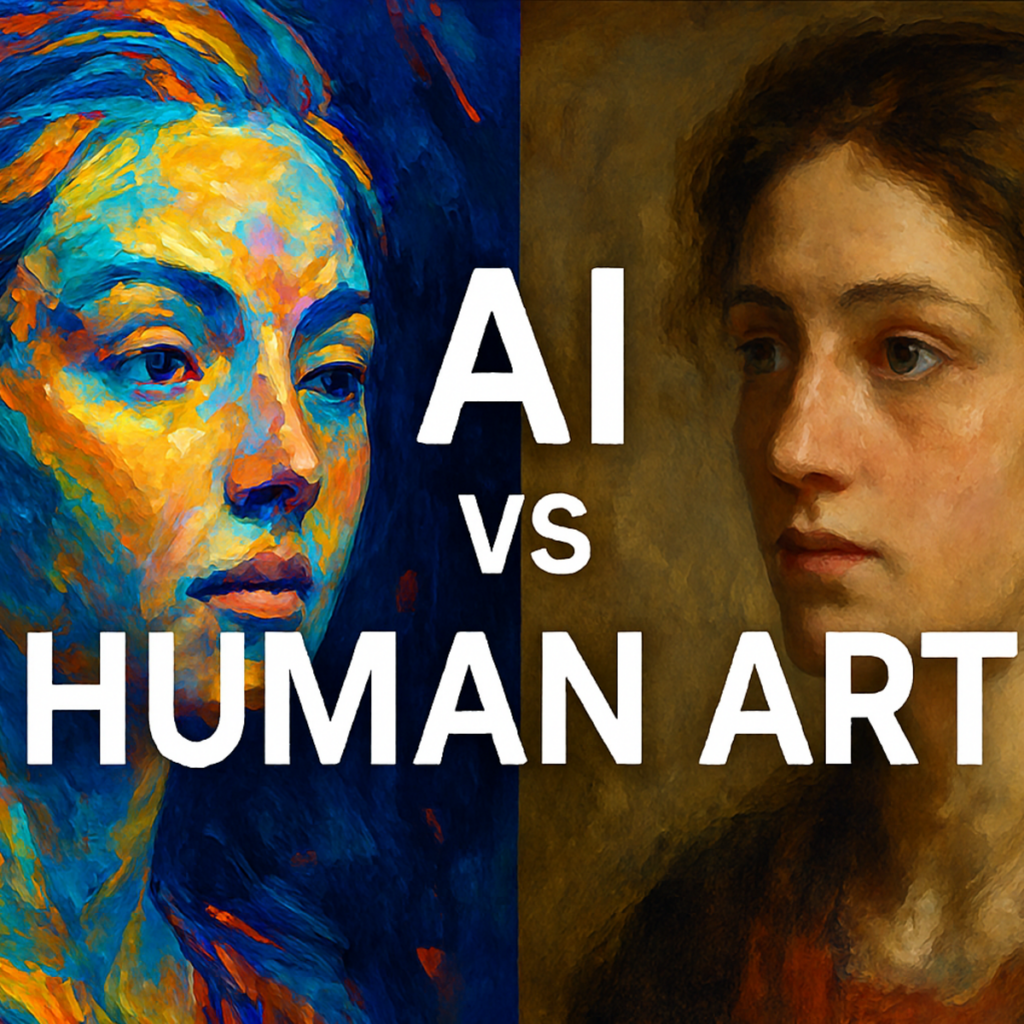
blog 1

After reading “Why A.I. Isn’t Going to Make Art” by Ted Chiang, I think Ted had some good points. For example, he said “A.I. can’t make art because it can’t make choices” and his point was that art comes from people’s experiences and decisions and not from a simple robot. I agree with Ted Chiang because A.I. doesn’t do nothing by itself and art gets created by emotions and decisions humans make. Ted Chiang argument resonates with my experience as a user of technology because people are using A.I. to code cheats in video games to outplay legit players which takes away the purpose of the game.

1.Can A.I. take peoples job because they could be somehow better than humans?

Tab 2

1.Chaing said about effort that people that use A.I. that they are not putting effort into their novels, such as the other people that are not using A.I. and are putting in their own thoughts.

2.Ted Chaing said college essays are import because they are a tool to strengthen and develop students writing and thinking skills. He also said that college essays are not only for the student’s thoughts but also for their ideas.

3.He said, “skill refers to how well one performs tasks, while intelligence is about how efficiently one learns skills.”

4.According to Ted Chiang A.I. is a fundamentally dehumanizing technology because people that use A.I. are not expressing their feelings or ideas on their writing and their all putting less effort into their writing because they know A.I. will do it for them.
