
Blog Post #2

Based on the article,”The Future of Writing is A Lot like Hip HOP”, the author Stephen Marche argues that AI can/would change a lot when it comes to art but also nothing at all because its all about your mind and how you use AI to your own advantage. Marche states,”Creative AI is going to change everything.It’s also going to change nothing.” Marche argues this because due to his experience AI was beneficial to topic he was working on to an extent but because of his own weakness he failed not because of the limitations of AI but the limitations of his mind.

After Marche states all his arguments, a key factor that stood out to me was when he stated creativity died down eventually after the use of AI which I couldn’t agree more on because after AI was made the lack of creativity has skyrocketed and we as humans in this generation use it for everything without genuinely asking questions or even taking the time to think about certain topics.
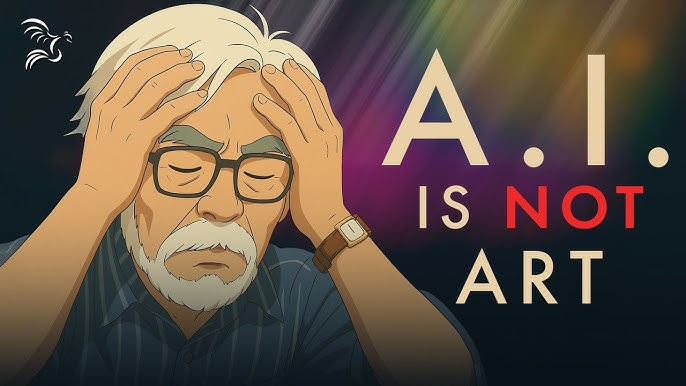

Prompt: Blog Posts #1

I have mixed emotions about this article meaning I both agree and disagree about some of the stuff that is being pointed out in this article. For example, I disagree on how AI usually “borrows” from similar images that are found online but I wouldn’t say it was borrowed and I would look at it as a “steal” instead of borrow unless the creator of the image is giving permission which I doubt. Some things I can relate to such as how when people use AI to explain what they are trying to explain more, I usually use it for when I’m texting someone to try to explain what I’m trying to say to them because I don’t know how to say what I’m trying to say sometimes. Also if I have a brutally honest thing to say, I use AI to find a way to put it in a more nicer way so I won’t come off as negative. Besides from that, I don’t use AI for work or trying to create ideas.

Question: is Chiang against or with Ai?

Blog 1

After reading “Why A.I. isn’t going to make art” by Ted Chiang, I party agree with the Ted Chiang, but I don’t think A.I. shouldn’t be used to make art. According to Ted Chiang, people didn’t consider photography an artistic medium when it was first developed. However, nowadays photography has become an important form of artistic expression. Why can’t A.I. be the next one? The key question is how to stop people from using A.I. to create works that pretend to be made by humans. Today, people don’t use photographs to pretend they are paintings, and that is what AI-generated art needs.

As a computer science student, I can say that A.I. can not truly think. It is just a tool, it often makes mistakes when the problem becomes complex. A.I. companies often state that AI-generated content may contain errors. Learning how to handle the problems produced by AI and make its generated content usable is also an important skill.

Question:

Can A.I. become a new art form in the same way photography did?

How can we encourage people to label works that use A.I.? How can we let AI-generated works compete with other AI-generated works instead of human-created works?

Blog Post # 1

After reading “Why A.I. Isn’t Going to Make Art,” I can say I agree with Ted Chiang’s argument. According to Chiang’s explanation, when someone writes a story or paints a painting, they make thousands of decisions regarding words, details and meaning. Whereas when someone uses A.I., a simple prompt is typed and the system fills in the rest. Chiang argues that A.I. generated work doesn’t truly creates originality, it throws together existing ideas and work, instead of inventing something completely new.

I can definitely see his perspective, because original writing usually takes time and effort. Chiang emphasizes around page 5 “Any writing that deserves your attention as a reader is the result of effort expended by the person who wrote it.” This indicates that writing becomes more meaningful and intentional when the write put real thought and work into it. From my experience using technology, A.I. can be useful- acting as a tutor, breaking down difficult topics for students. However, when it comes to writing, that is where the line should be driven, because A.I. robs writer and creatives of the opportunity to connect with their audience through emotion. Chiang’s point on intention grabs my attention. He argues that language is meant to communicate feeling or idea, but since A.I. is computerized, it can’t convey human characteristics. Therefore, it can’t truly communicate the way a human does.

My question- Chiang suggests that human experience is what gives art meaning. Which A.I. advancing each day, would it ever be able to capture/ imitate the human experience ?

Tab 2

  1. Chiang argues that effort is crucial for meaningful writing. He states “any writing that deserves your attention as a reader is the result of effort expended by the person who wrote it.” He explains that art requires many choices, so even the small choices made during the process are very important in the end.
  2. Chiang explains that purpose is to strengthen students’ critical thinking skills. He compares writing essays to lighting weights. Skills that students can utilize later.
  3. Chiang explains that skill is how well someone performs a task, while intelligence is how efficiently someone can gain new skills. 
  4. According to Chiang A.I. is dehumanizing because it reduces human intention in communication. He says it “treats us as less than what we are. Chiang also goes on to say we are , “creators and apprehenders of meaning” and it “reduces the amount of intention in the world.”

Blog Post #1

  1. What does Chiang say about effort? What is it’s role in the creative process?
    Chiang is saying that effort inspires an individual to embrace their creativity within the work they put in. Effort plays a role in the creative process by letting the individual construct an idea and really think about the technicalities that come along with it, doing this helps develops ones understanding and the quality of their work becomes more authentic.
  2. What does he say about the purpose of college essays?
    Chiang says that the purpose of the college essays is to help students with their critical thinking skills and communication skills. He claims that if AI writes their essay for them, the students loses all the learning value/ material from completing the essay themselves. When someone is actively writing a college essay with their own thoughts this helps them not only form their ideas on a paper but enhances their abilities to clarify their ideas and how to explain themselves in a way the reader can understand as well.
  3. What does he say about “skill” and it’s relationship to intelligence?
    Chiang explains that skill actively demonstrates how a persons mind has the ability to understand and interpret something. Whether it’s drawing, writing or doing math etc., putting these skills to practice helps train ones intelligence overtime. He claims using a machines to complete these task for you defeats the purpose of developing your own cognitive abilities.
  4. Why, according to Chiang, is A.I. “a fundamentally dehumanizing technology”?
    Chiang believes A.I is a fundamentally dehumanizing piece of technology because it removes the human authenticity of ones intelligence and their creative side. When doing a task people use the skills they learned before to practice to help them formulate their thoughts, but when AI steps into the equation it completely by passes that, leaving just the outcome of what was asked for. This diminishes the human development processes and their creative minds depletes.
  1. Having read “Why A.I. Isn’t Going to Make Art” by Ted Chiang, what are your thoughts? Do you agree or disagree with Chiang? Why or Why not? Does what he argues resonate with your experience as a user of technology or a creator/writer?
    My thoughts about reading Ted Chiang article is I do believe that AI cannot make art, but it can 100% replicate it. I do agree with the statement of the amount of effort and creativity it takes to recreate any art or piece of writing, I believe that everything a human does is intentional. There’s always meaning behind what any individual does which makes us more human than any AI can replace. It gives us as a society a sense of normality since our day of age you can’t recognize what is authentic and what is not. It also goes to show the amount of effort one is willing to put out there to share their personal experiences and put their cognitive skills to use to communicate their beliefs/opinions on a topic their passionate about indulging themselves in.

I largely concur with the idea of Ted Chiang who wrote the article titled Why A.I. Isn’t Going to Make Art. According to him, true art is as a result of the numerous minor decisions that people make in the process of producing something. When an individual writes or paints, he or she makes all the decisions by themselves. AI typically simply generates by learning a pattern of the work of the other people. Due to this fact, it lacks real feelings and experiences as human beings do.

This is in relation to my experience with technology. The AI tools can prepare things in a short time, but the results are not necessarily personal. When an individual develops something by his or her own, people thoughts and feelings are involved in it and this makes the work more valuable.

Questions :

  1. Will A.I be ever as creative as humans are?
  2. Will A.I ever replace artists completely?

My Thoughts on AI and Art

After reading the article “Why A.I. Isn’t Going to Make Art,” I understand that AI can create images or text, but it does not really understand art like humans do. Real art usually comes from people’s feelings, emotions ,culture, and personal stories. AI learns by copying patterns from many artworks, but it does not have its own ideas and emotions. I think AI can be useful for artists as a tool, but it cannot replace human creativity. Human artists create art to express emotions, and that is something AI cannot truly do.

Overall, this article made me think more about the difference between technology and human creativity, and why emotions and experience are important in art which only human can do but not AI.

My opinion on ai

Overtime technology has been becoming more advanced and in many ways has helped us with our daily life, although I do agree with Ted chiang that AI is not the same as voicing your own opinion and does take away from your creativity. As a college student I would be lying if I said I’ve never used chat gbt (an ai program) for studying , but I do believe when it comes to art or writing your paper it takes away from your own thoughts. In a way I believe that ai is just making a lot of people lazy and dependent on ai to write their school papers or even for our daily writing. Ted chiang in his writing does a example with hallmark cards saying that we wouldn’t copy exactly what the card wrote because it wouldn’t feel dishonest, and would also be less meaningful because it’s not coming from you. Although ai has its cons I also believe that there’s a limit of what we can use it for, as humans we want to keep our mind racing, to express our selves whether irs in writing, art or in any way , ai makes us depends on a computer that’s basically writing with no meaning to it or our own perspective.

Questions: can you imagine your self living in a world where ai does all your work and you’re not able to express yourself ?

Does ai affect students in today’s academic learning due to high dependency?

Aaliyah’s Blog Post

Do you think AI can capture or even replicate the emotion in art?

Chaing’s argument vocalizes that no matter how advanced AI is it can’t express human emotions properly. AI lacks empathy and human emotions and therefore cannot accurately replicate emotions. 

Although AI can mimic almost anything such as  solving complex, it cannot capture the depth of human emotion.  It can only identify and manipulate patterns. It lacks the ability to experience human emotions and therefore the ability to truly replicate art accurately.

According to Chaing, ” the fact that art is derives from unique life experience and arrives at a particular moment in the life of whoever is seeing your work is what makes [art] new.” This captures a perfect example that although AI can mimmick what we do as humans, it simply just cannot capture the perception of human emotion. Not because it’s truly complex, but because it lacks the experience that us humans face day in and day out. Art is emotion. It is a form used to capture emotions. Ai lacks the ability to convey emotions which we gain through experiences in daily living. 

Lastly, art bridges our internal world with external experiences. This is why Chaing’s argument resonates with me, because I agree that AI cannot articulate a humans emotion throughly. It lacks the lived experiences and conciseness on what it means to make meaningful art. 

question- If AI became more advances/ more human like, how does it affect the working class future?